
 中文(繁體字)
 English (international)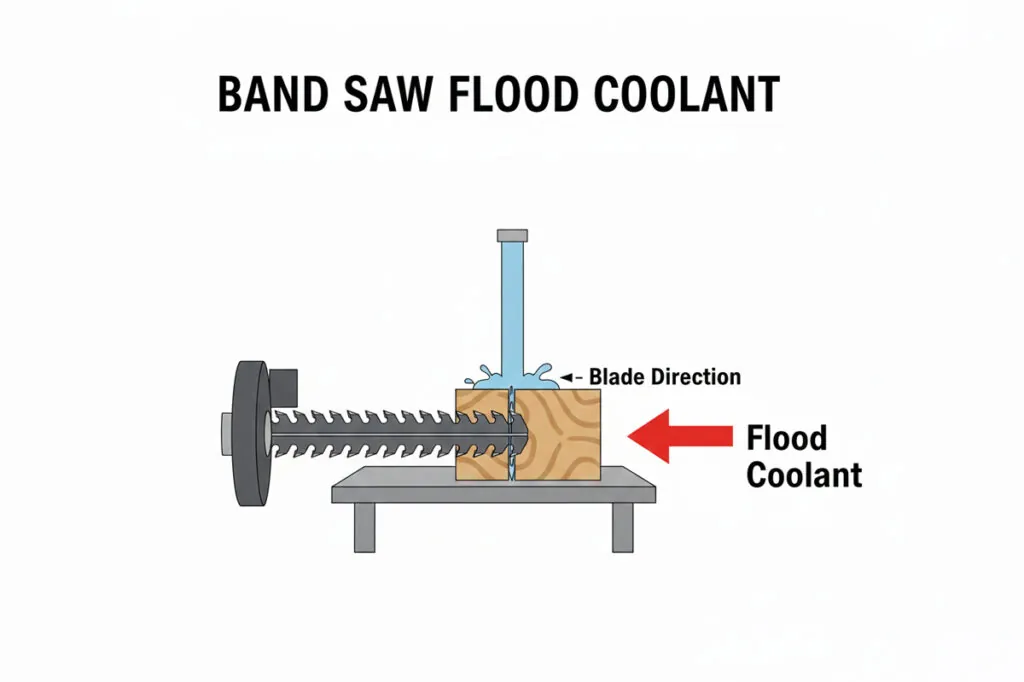
Definition of Flood Coolant
Why It Matters for Band Saw and Mill Drill Machines
FAQ
What are the key differences between band saw flood coolant and mist coolant systems?
Band saw flood coolant and mist systems differ fundamentally in delivery method, cooling capacity, and application suitability. Flood coolant supplies continuous liquid streams at 2-10 gallons per minute, completely bathing the cutting zone in fluid. Mist systems atomize small quantities of fluid into an air stream, applying only a fine spray to the cut interface. Flood coolant excels at heat removal through high-volume convective cooling and provides superior chip evacuation via mechanical washing action. Mist systems offer minimal cooling but reduce fluid consumption and avoid the mess associated with band saw flood coolant splashing. For production cutting of metals, particularly difficult materials like stainless steel or titanium, flood coolant delivers far superior blade life and cutting rates. Mist systems suit light-duty applications, materials requiring minimal cooling, or situations where fluid contamination must be minimized.
How do you determine the optimal flow rate for band saw flood coolant systems?
Optimal band saw flood coolant flow rate depends on blade width, cutting speed, material thermal properties, and cut depth. General guidelines suggest minimum flow rates of 2-3 gallons per minute for blades up to 1 inch wide, increasing to 5-8 GPM for blades 1.5-2 inches wide, and 8-10 GPM for larger production blades. Hard materials with low thermal conductivity like stainless steel or titanium require higher flow rates to remove heat effectively. Operators should adjust flow until visible steam or smoke disappears from the cutting zone and blade temperature stabilizes at levels comfortable to touch shortly after cutting. Excessive band saw flood coolant flow wastes fluid, creates splashing, and can deflect thin blades, while insufficient flow allows overheating. Monitor chip color; proper cooling produces silver or brass-colored chips, while blue or straw coloration indicates inadequate coolant flow requiring increase.
What maintenance practices ensure band saw flood coolant system effectiveness?
Effective band saw flood coolant maintenance begins with regular concentration monitoring using a refractometer to measure fluid dilution ratio. Most cutting fluids require 5-10 percent concentration in water; levels below specification reduce lubricity and corrosion protection while excessive concentration wastes expensive fluid and may cause residue buildup. Weekly testing prevents concentration drift. Filtration system maintenance proves equally critical; clogged filters reduce coolant flow and pressure, compromising cooling effectiveness. Clean or replace filters when pressure drop across the filter exceeds manufacturer specifications. Tank cleaning removes accumulated sludge, chips, and biological growth. Complete band saw flood coolant changes should occur when fluid develops foul odor, changes color dramatically, or pH drops below acceptable range, typically every 6-12 months depending on usage intensity. Skim tramp oil from tank surfaces weekly to prevent fluid degradation and maintain cutting performance.