
 中文(繁體字)
 English (international)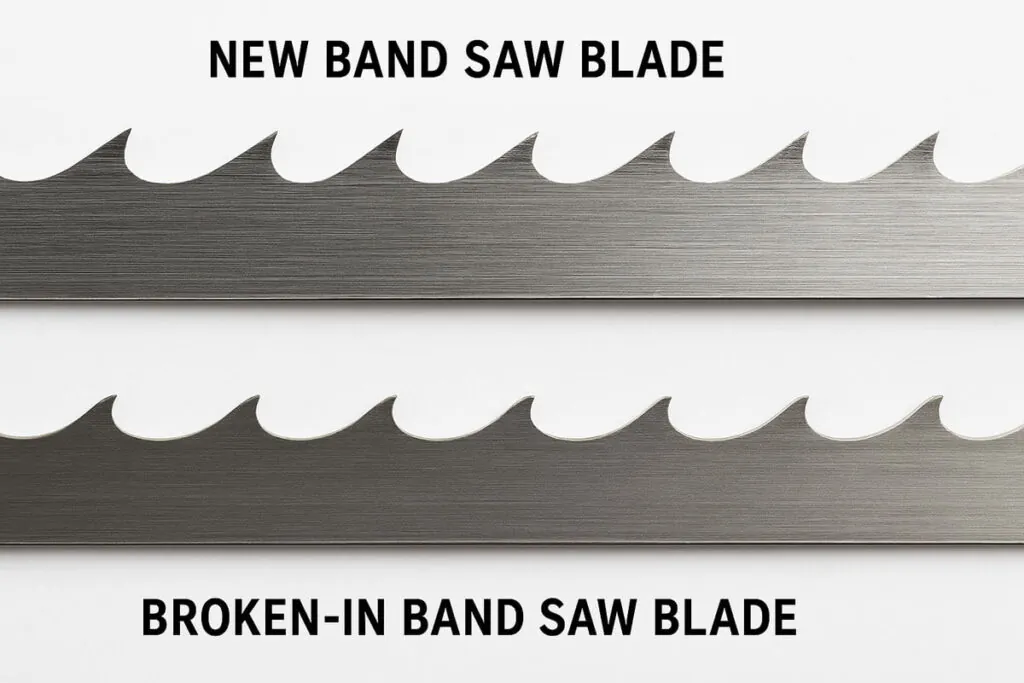
Definition of Blade Break-In
Why It Matters for Band Saw and Mill Drill Machines
Related Terms
Band Saw Blade Tension Band Saw Tooth Pitch Band Saw Feed Rate Band Saw Cutting Speed Band Saw Coolant Flow Band Saw Kerf WidthFAQ
What happens if I skip band saw blade break-in?
Skipping band sablade break-in can lead to early tooth chipping, uneven wear, and reduced cutting accuracy. The sharp, unconditioned tips of a new blade are more brittle, so they are likely to crack under normal cutting pressure. This shortens the blade’s usable life and increases replacement costs. In addition, a blade that has not been broken in often produces rougher cuts and generates more vibration, which can stress the band saw machine itself. Over time, this can affect maintenance schedules and production output.
How should you perform a band saw blade break-in for maximum life?
To break in a band saw blade, run it at the normal cutting speed but reduce the feed pressure by about 50% for the first 50–100 square inches of material cut. This lets the teeth wear evenly without chipping. Gradually increase the feed to full rate once the cutting sound and feel become consistent.
Why does a band saw blade break-in prevent tooth chipping?
A new band saw blade has sharp microscopic edges that can be brittle. The break-in process rounds and strengthens these edges under controlled cutting conditions, making them less prone to chipping. This ensures a smoother cut and reduces early blade failures.